A Love Letter to Writing and Why I Won’t Use Generative AI
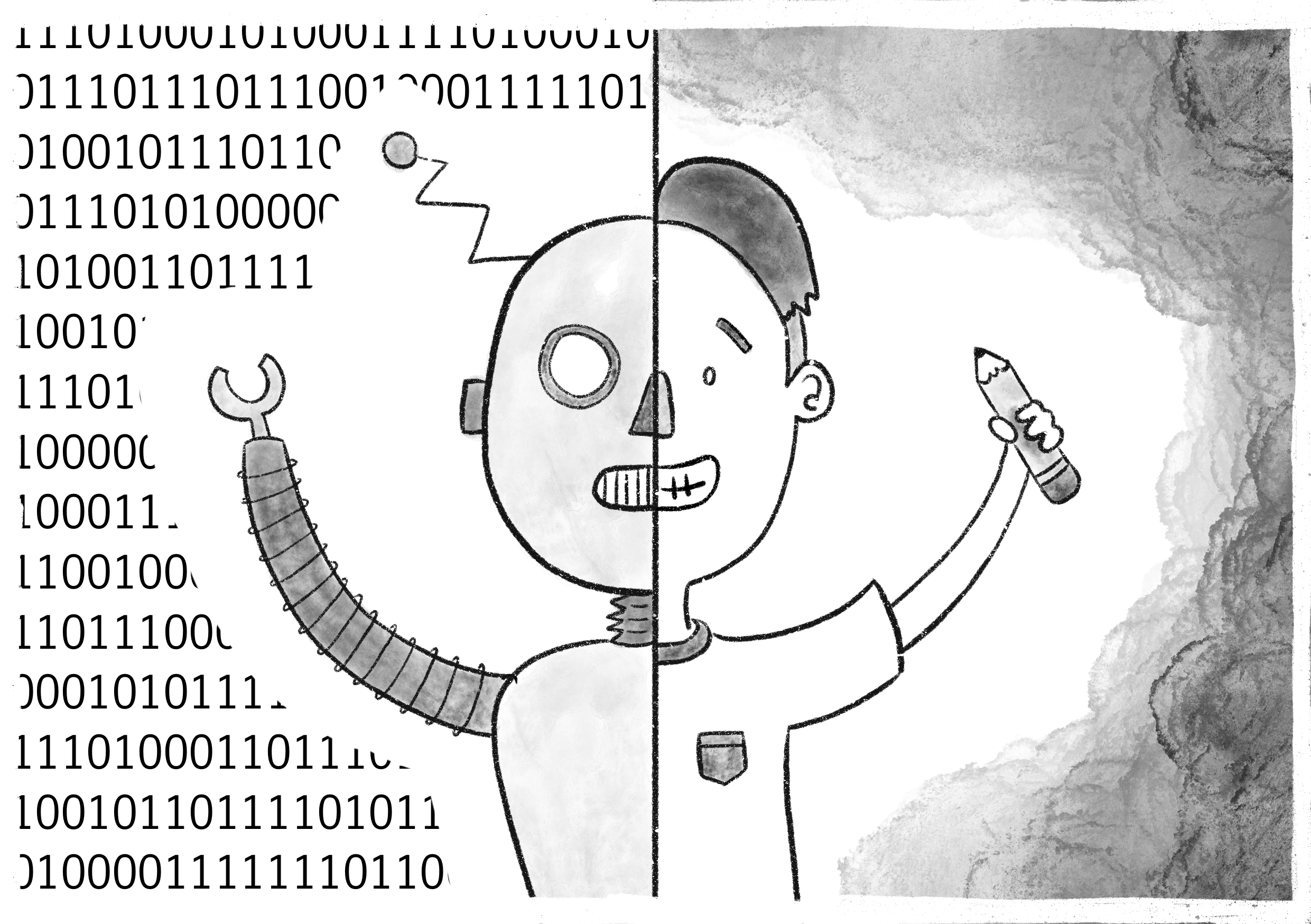
There is simply no denying it: generative AI is here, and it looks like it’s here to stay. I dunno about you, but it feels like I can’t look anywhere without seeing remnants of its greasy fingerprints: AI-generated profile pictures, AI-generated ads, AI-generated voiceovers for AI-generated short-form content. In the last few months, I don’t think I’ve been able to go a day without coming across an AI-generated something.
Despite its ubiquity, I can’t bring myself to embrace generative AI. I’ve heard arguments for how much time it might save me, how much “more” I will be able to “write” with its assistance, but I continue to drag my feet.
A number of years ago, my family got a Thermomix: it was presented as a magical time saver. It could do everything: chop, mix, blend, steam, stir-fry. It could make yoghurt. Bread! You name it, the Thermomix could do it. It was clear the ways it made cooking more accessible – people who were not confident in the kitchen suddenly had this amazing new tool (and the manual it came with) to start cooking at home.
I had just returned from the US after having spent a year learning to do food shopping and cooking for myself. I had spent the four years before that as a fry cook in the on-campus diner, learning how to cook eggs and cheeseburgers for other people. I was getting the hang of the process and really starting to enjoy it. So you can imagine that flashy and high-tech as it was, the Thermomix had little appeal to me.
Why on earth would I want to dump all my ingredients into a cold metal bowl and push buttons in a specific order when I could heat up a pan and watch the ingredients dance around in it? Why would I deny myself the flexibility and fun of tasting as I go, adding herbs and spices as the spirit moves?
My experience with writing is similar.
Writing is not the end product – the article in the paper, the book on the shelf. Writing is the process. It is the reading of fiction and non-fiction, it is the staring off into the distance as your synapses fire and make new connections, it is the wrestling of ideas into submission.
Writing with generative AI is like cooking with a Thermomix, except if the Thermomix also added its own ingredients and spices, and all your button presses maybe did what they were supposed to do. But if all you’re after is something that resembles edible food, then congrats - you did it – you have Food™.
But I’m hungry for more than that.
There is a certain satisfaction that you get when you are able to put your thoughts and feelings into words. It is that breath of air after holding your head underwater, that sip of cool electrolytes after a day in the sun, the feeling of clean sheets against your freshly showered body. It is the spectacular view at the end of a gruelling uphill climb that makes each excruciating step feel worth it. More than that, it’s fun.
A blank page offers you infinite space to play, explore, and imagine. There is room to try. There is room to fail. And there is always enough room to start again.
Becoming a good writer is something that takes practice. I believe it to be something I will be working toward my entire life. After all, the writing muscle demands exercise to grow. As I watch people begin to lean more heavily on GenAI for prompts, editing, and even the writing itself, I feel sad that they’re missing out on the joy and accomplishment of making something themselves.
There are a handful of ways that GenAI can be a useful tool, but when it comes to writing, I see it as a stumbling block. It keeps you from experiencing the process in full, prevents you from learning, and denies you ownership over whatever you made with it.
Writing can feel impossible, but it also can feel euphoric.
And I want to feel all of it.